

The HP Reverb G2 upgrades Windows Mixed Reality with Valve’s VR design smarts and 4 cameras - mcdonaldgrot1995
The HP Reverb G2 might be the savior Windows Heterogenous Realness (Mister) thus desperately needs. Hopefully. Announced Thursday but not available until the fall, HP has a lot to evidence and a luck of skeptics to convert, myself included.
I've spoken frequently, and loudly, about my issues with the Windows MR ecosystem. Even off in 2017 the hardware was a bit underwhelming, and the ensuing "upgrades" never rectified some of the profound problems with the platform. Terminal class's H.P. Reverb faced a best-in-class video display and an Oculus-like purpose—but paired with the Windows Mr platform's damaged trailing root, you might also have got been drive a Ferrari with square wheels.
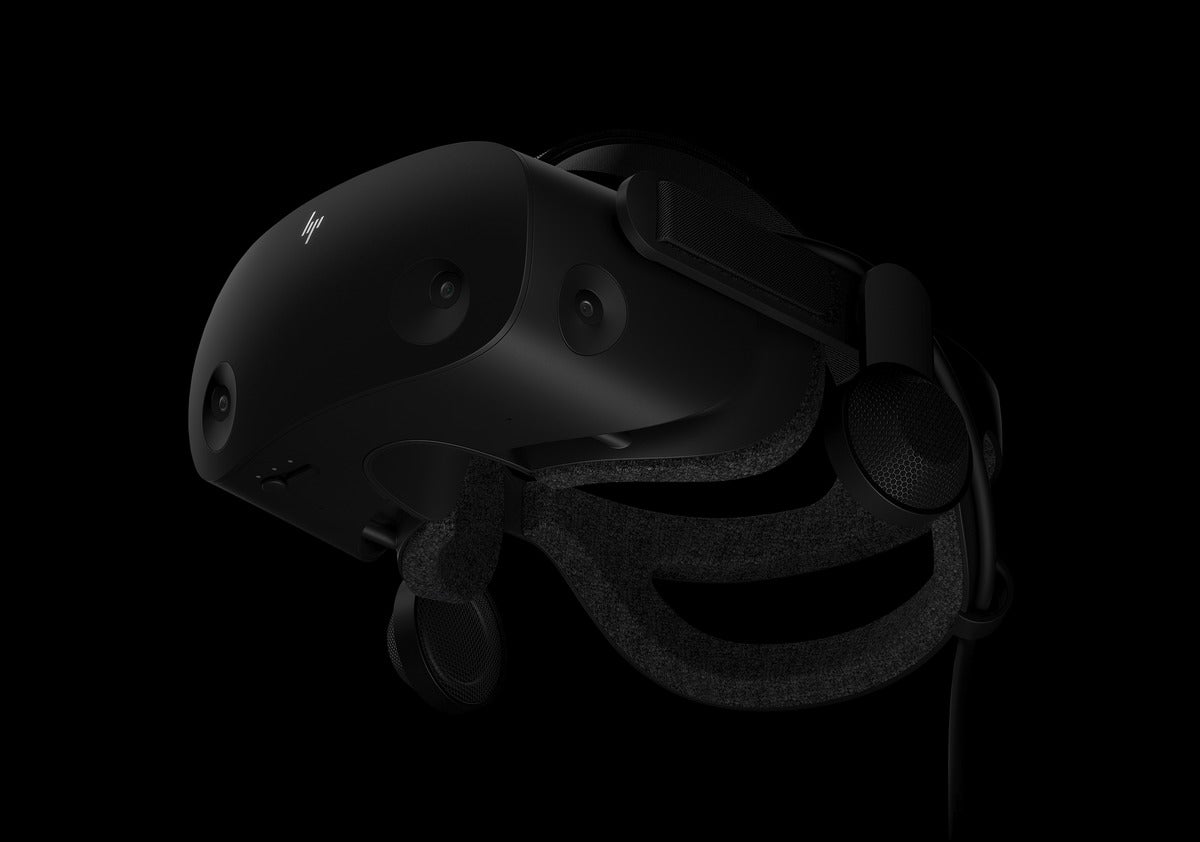
But and so I heard Valve was involved with the Reverb G2. Valve, who helped HTC launch the original Vive. Valve, WHO now makes the best VR headset money can steal, the Exponent. Valve, who with the Reverb G2 apparently helped HP seduce the first Windows MR headset to develop the platform since set up. They've done it by…well, lifting a lot of the Valve Index hardware. Oh, and upgrading to four cameras.
Quaternity. Cameras.
To excuse why the HP Reverb G2 matters indeed much, I have to delve into the history (and limitations) of the Windows MR platform. Tolerate with me.
 HP
HP Organism outset has its drawbacks. When the first Windows Mixed Reality headsets rolled stunned in 2017, they had one major advantage concluded the then-current Optic Rift and HTC Vive: improved-in tracking. No base stations. The Rift and Vive required setting dormy devices wholly roughly the room for tracking, but non Windows MR.
One device. One USB port. Windows MR successful setup easy. The headset, with duple cameras and other sensors, could track both its own position in the room and the location of the 2 controllers. You could be up and running in a minute or two. Contrast that with the Vive, which came with climb hardware so you could confiscate its box-shaped Pharos base stations to your walls,for good.
But while base stations were (and are) ugly, they were besides precise. The Vive set the bar higher, with rock-solid trailing even in evenhandedly large suite. The Rupture struggled a little Thomas More with its room-scale solution, but it was notwithstandinmiles better than Windows MR. The dual battlefront-veneer cameras on Windows MR headsets simply couldn't track a wide variety of important hand out motions.
Throwing an targe is an soft example. Imagine pick up an object up from the floor and throwing it. How often are your hands actually in view? When you get up your hand and bring out it spine, exercise you watch yourself do it? Belik not. The brain is remarkably proficient at natural philosophy calculations. You bow your sleeve, draw your hand back along your ear, then fling it forward. It's self-generated.
Windows MR headsets lose track of your men as shortly every bit they're out of sight. Oh, theytry to overcompensate. Various sensors take into account Windows MR to overestimate where itthinks your hands might be when they bequeath the comparatively narrowing field-of-view of those front-facing cameras. The longer your hands are wanting though, the fewer accurate the gauge. It successful games likeSuperhot, where economy of motion is critical, incredibly frustrating on Windows MR headsets.
Worsened, the cameras would occasionally lose track of the entireboard if all landmarks temporarily disappeared from its raft. This could direct to disorienting moments where the player's catch snapped from place to place, or the headset left the player aground a some feet above the base. Once more, the longer you played in any given academic session, the more probable you were to clash issues.
The early Windows Mr headsets made me skeptical of built-in tracking solutions. Then Oculus Pursuance and the Oculus Rift S came along, with quartet and five cameras respectively. Suddenly, integral trailing was "good enough." Sure, the Quest and Break S still can't match the Index's preciseness, but they do a solid Book of Job under most circumstances, and they're a hellhole of much more portable than the Index's place stations.
 HP
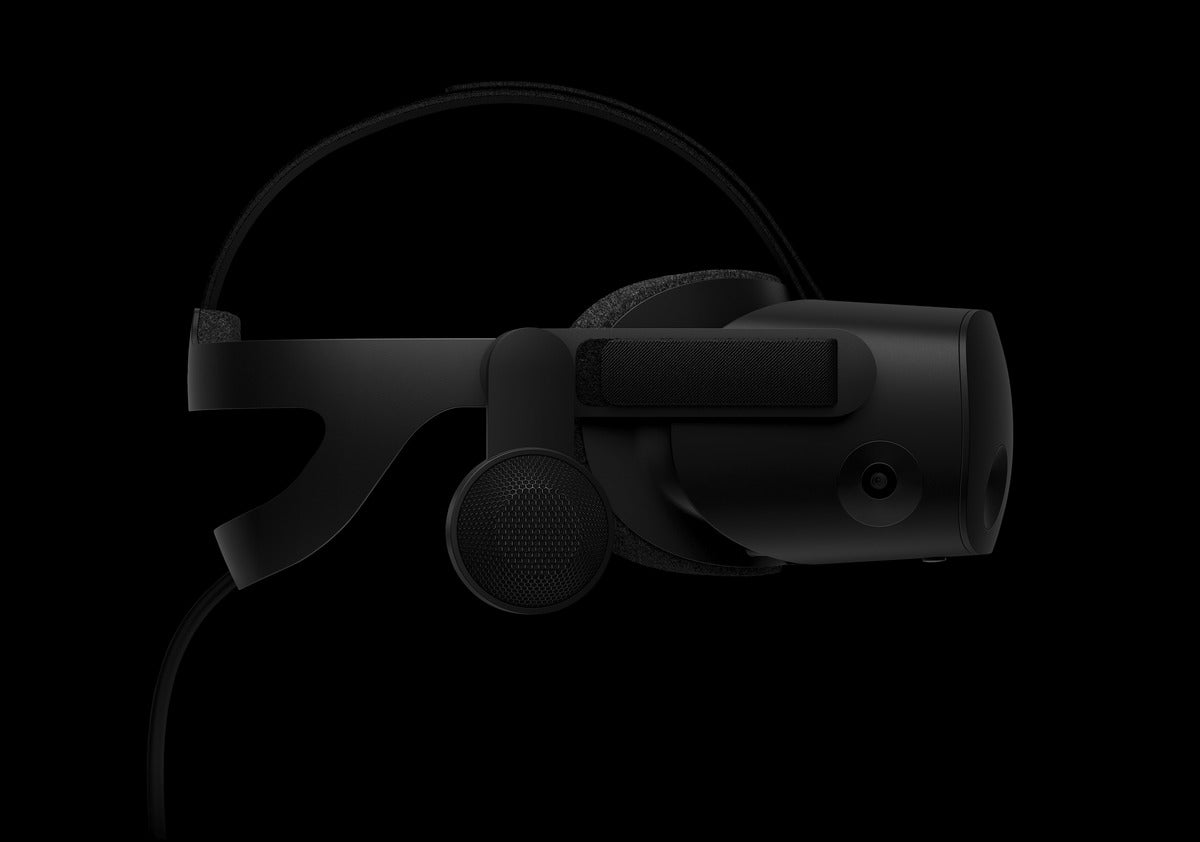
HP The Reverb G2 is the outset Windows MR headset to erupt of the dual-tv camera paradigm. I can't assure you why it didn't happen earlier, nor can I tell you whether this is an HP-taxonomic group evolution, or if we'll see it on totally Windows Mr headsets going forward.
What Istool tell you is that IT makes the Reverb G2 in a flash more attractive than its predecessor. The two English-facing cameras should in spades help extenuate the MR platform's tracking problems. We just don't experience how much yet.
Sound and fury
I've worn-out much time discussing the Little Jo-camera trailing because it's an essential upgrade. As I aforementioned earlier, there can buoy be no "high pressure-end" Windows MR headset with the old front-lining camera solution—especially with the Oculus Rift S and Quest providing a break experience for only $400.
Horsepower and Valve have got made a number of other improvements to the Reverb G2 though, and assumptive the tracking solution lives adequate its potential? The Reverb G2 could essentially slot in as the entry-horizontal Valve Index.
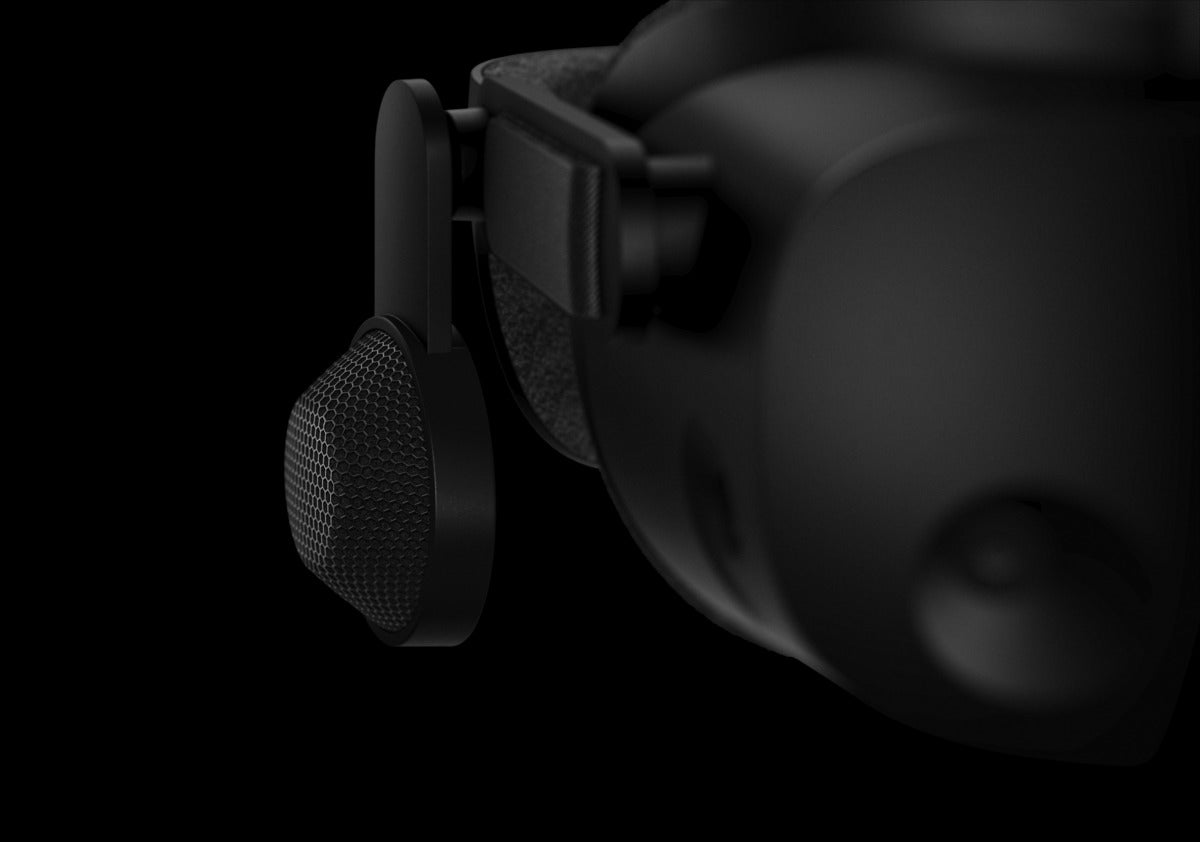
Information technologyis an Index, in a good deal of shipway. Just look at the speakers. Those are the aforementioned speaker-headphones employed connected the Indicator, creating a field of sound roughly the user's ears. The results are much Sir Thomas More veridical than anything you sustain from the drop-down headphones used on the original Reverb.
 HP
HP Valve also helped HP custom-made-design unexampled lenses for the Reverb G2. And if they spirit like the Index lenses? Well…they basically are. HP says they'ray slightly smaller, to fit the Reverb G2's display. They use of goods and services the same Augustin Jean Fresnel design though—and HP's enclosed a physical IPD slider like the Index, as well.
Assuming the tracking holds up, the Reverb G2 might prove to atomic number 4 Valve's placeholder-war competition for the Oculus Rift S. The Rift S has one more than camera, the Reverb G2 has a better display (2160×2160 at 90Hz). The Rift S has the more roomy bicycle helmet adjustment, the Reverb G2 has the Index speakers. Neither is in truth an Index competitor, but neither is trying to be.
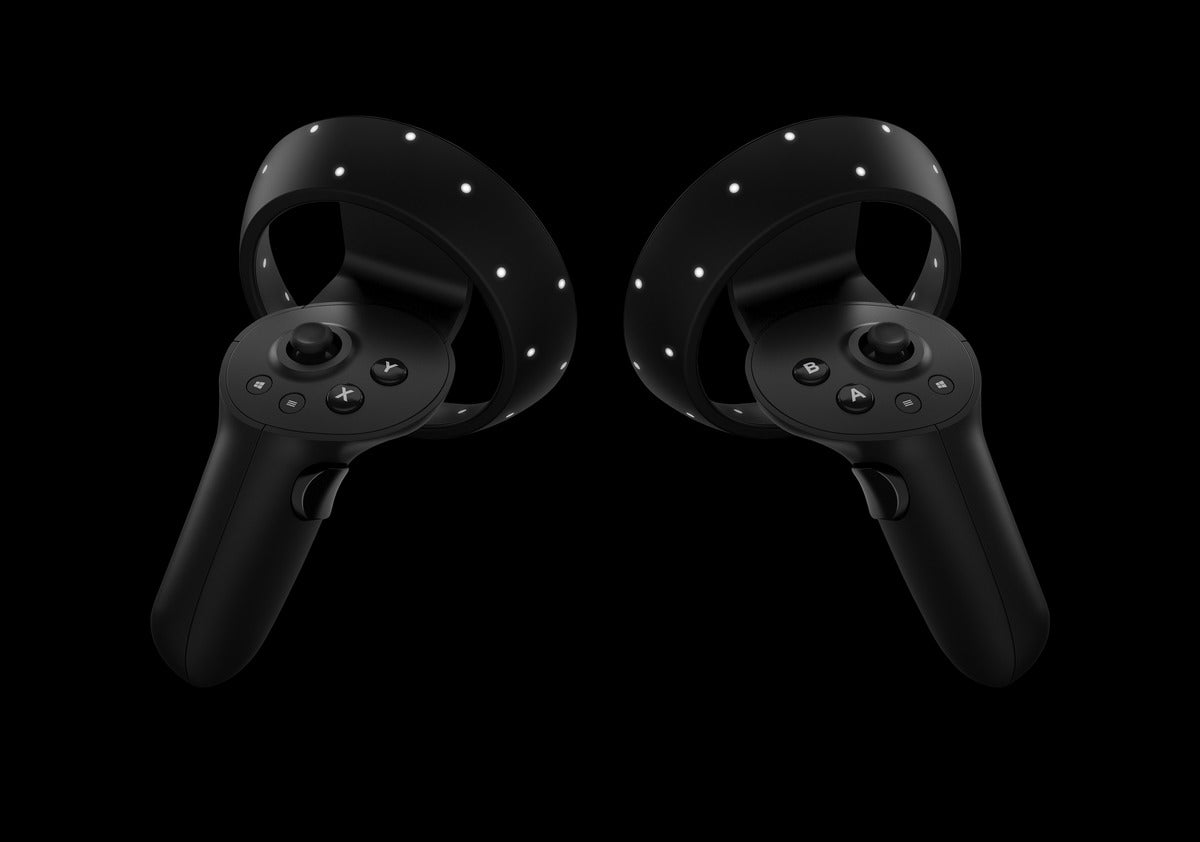
The only aspect I'mreally concerned about is the controllers. HP claims IT redesigned the Reverb G2's controllers, ditching the stock Windows MR controllers. They've removed the touchpad on each comptroller, instead mirroring the more traditional ABXY layout from the Oculus Touch.
It's a good step forward, but the Reverb G2 controllers still look a bit like third-party Oculus Touch modality knockoffs. I'll be prying to know how comfortable they are, given the avant-garde Windows MR controllers felt square and awkward. Either right smart, they're certainly no match for the finger-tracking Index controllers.
 HP
HP At that place'sunmatched more aspect I'm attentive about: Price. The Rift S and Quest are a slip at $400. VR's barrier to entry has born considerably since the consumer models debuted in 2016. While I love the $1,000 Index, it could use an entry-level equivalent.
The Reverb G2 lands north of competitive, though. At $600, information technology's definitely cheaper than an Index—but placid much,much more expensive than a Rift S or Bespeak. That's doubly disappointing given that buying into Oculus's ecosystem gives you headache-free access to some of the best VR titles available, like the Eye-exclusiveLone Sound reflection andAsgard's Wrath.
Positive, the Reverb Gen 2 has better audio and a better display. It might even have better tracking, though we North Korean won't know for sure until we've spent some fourth dimension with the headset. But it mightiness not matter. At $600, the Reverb G2 already feels like it's at a disadvantage. It could be gripping for people who want an acclivity to the Rift S and Quest, but how many a of those masses would settle for the Reverb G2 rather of springing a few one C dollars Sir Thomas More for the Indicator? I'm not surely.
Thither's no clear path to upgrade, either. That's equally worrisome to me. Valve's been bad secure close to cross-headset compatibility so Former Armed Forces. The Index testament work with first-gen Vive hardware, so you could upgrade just the headset operating theatre scarcely the controllers and economize or s cash in on. Only HP doesn't even seem sure whether its new controllers will be standard for the Windows MR platform going progressive, and that's a bit mismatched. The last thing VR needs is a much fractured landscape.
A promising future
Even off with some unknowns, the HP Reverb G2 is a promising development for the beleaguered Windows Mr ecosystem. Windows MR has been a distant third-place contender for a yearlong clock time now, behind Oculus and Valve/HTC. The Reverb G2 doesn't wor all of the problems with Windows Mister, merely it at least solves many of the biggest.
The HP Reverb G2 releases this fall, and preorders are open like a sho. I'm look forward to giving information technology a prove at some distributor point. VR is nevertheless early, and in that location's definitely a rising-tide aspect to competition. The Thomas More the better.

Source: https://www.pcworld.com/article/399210/the-hp-reverb-g2-upgrades-windows-mixed-reality-with-valves-vr-design-smarts-and-4-cameras.html
Posted by: mcdonaldgrot1995.blogspot.com
0 Response to "The HP Reverb G2 upgrades Windows Mixed Reality with Valve’s VR design smarts and 4 cameras - mcdonaldgrot1995"
Post a Comment